
Make Every Cubic Foot Count
Warehouse Mezzanines & Work Platforms

Custom Designed Mezzanines & Work Platforms
Mezzanine or work platform spaces are among the most economical ways to maximize use of your industrial warehouse, distribution center, or storage facility. By building up, you can safely move operations to otherwise unused space and streamline operations in the process. The Apex team has created mezzanine spaces in all varieties, from the simplest catwalk access platforms to multilevel complex pick modules.
Mezzanine Space Use
Mezzanines accommodate far more than basic warehouse storage. The mezzanine level can serve nearly any function your operation requires. Common applications include:
Additional pallet, carton, or parts storage
Order picking and kitting stations
Manufacturing and production areas
In-plant offices and conference rooms
Break rooms and locker rooms
Equipment platforms and mechanical staging
Security enclosures and controlled-access areas
Catwalks for cross-facility access
The right configuration depends on your operation’s priorities. Whether you need dense storage overhead or a climate-controlled workspace above your production floor, the structure adapts to fit.
Rack Supported vs. Industrial Work Platform Mezzanines
Warehouse mezzanines fall into two primary construction categories. Each serves different operational needs, budget ranges, and facility conditions. Understanding the differences helps you match the structure to your application before the design phase begins.
Rack Supported Mezzanines
Rack-supported mezzanines are configured within your pallet racking, using the rack structure itself as the foundation. The mezzanine level sits above or spans across rack aisles, creating a second tier of usable space without requiring separate structural columns.
This mezzanine storage system is ideal for order picking, kitting operations, and material handling workflows where products need to move between levels efficiently. Conveyor integration connects levels for faster throughput. You can configure the platform with carton flow, cantilever shelving, pallet flow, conveyor systems, stairs, and pallet gates, all within the existing rack footprint.
Key advantages: Lower cost than freestanding structures. No footings are typically required for multi-level configurations. Efficient use of aisle space that would otherwise sit empty above your storage systems.
Best fit: Operations that already use pallet racking and need to add picking, kitting, or light storage above existing aisles.
Not ideal when: You need heavy floor loads across the platform, require frequent layout changes, or plan to add large office buildouts above the mezzanine level.
Industrial Work Platforms (Freestanding Mezzanines)
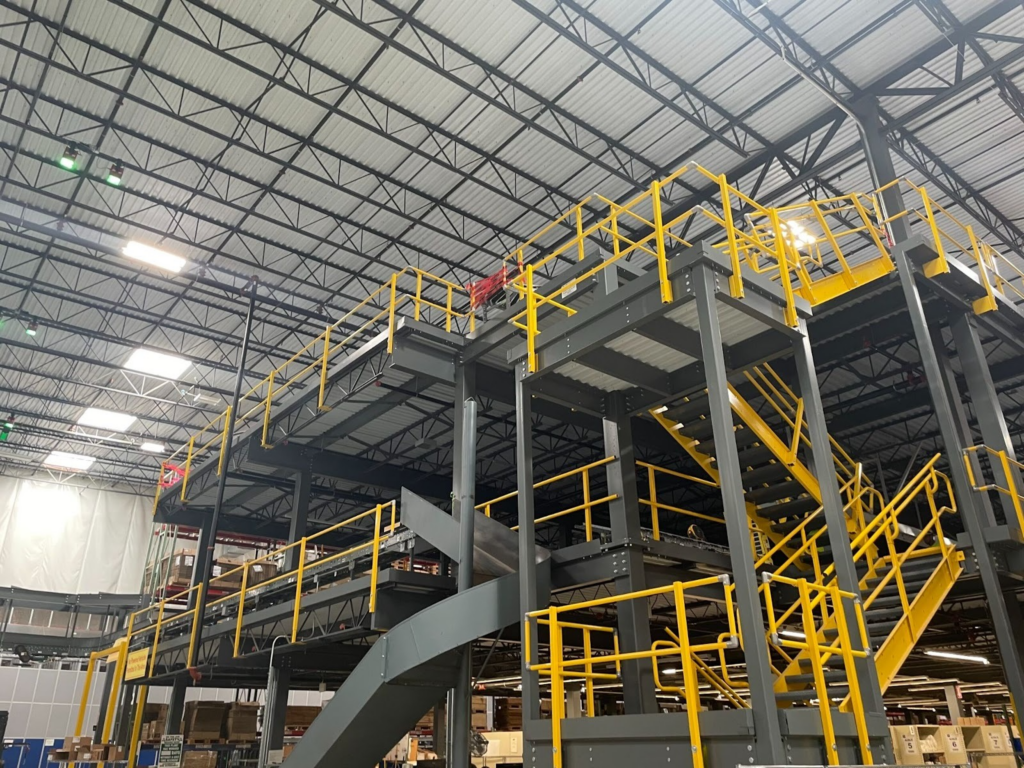
Industrial work platforms are heavy-duty, freestanding mezzanine structures independent of any racking system. Built with structural columns and steel decking, they stand on their own and support a wider range of uses and heavier loads than rack-supported configurations.
Freestanding mezzanines offer more flexibility for operational changes over time. Adding conveyors, in-plant offices, shelving systems, and additional workspaces is simpler because the structure is not tied to rack geometry. Fewer columns mean more versatile placement options, and stair, gate, and handrail locations can be positioned wherever your workflow demands.
Key advantages: Easier to expand after installation. More accommodating to layout changes. Sprinkler-friendly design (joist and girder webbing allows compliant fire suppression). Structural mezzanine columns provide independent load-bearing capacity separate from storage systems.
Best fit: Facilities that need heavy-duty platforms for offices, production areas, equipment staging, or operations likely to change over time.
Not ideal when: Budget is tight and you already have racking infrastructure that could support a less expensive rack-supported configuration.
Shelving-Supported Mezzanines
Shelving-supported mezzanines use industrial steel shelving as the structural foundation, creating an elevated platform without the cost of dedicated mezzanine columns or traditional construction. This is a cost-effective solution for operations that need additional square footage but want to minimize upfront investment.
These systems are available in open or closed configurations with solid or permeable surfaces. Drop zones and lifts keep product moving between levels. Because the shelving itself is highly customizable (adjustable shelf heights, varied depths, multiple accessory options), the system evolves with your business as storage needs change.
Key advantages: Minimal construction costs. Shelving and platform serve dual functions, maximizing ROI per square foot. Fast to configure and reconfigure as your operation grows.
Best fit: Smaller-scale expansions, parts storage, light assembly areas, and facilities looking to add space without a major capital project.
Not ideal when: You need heavy uniform loads, large open floor areas on the upper level, or integration with conveyor systems that require structural-grade support.
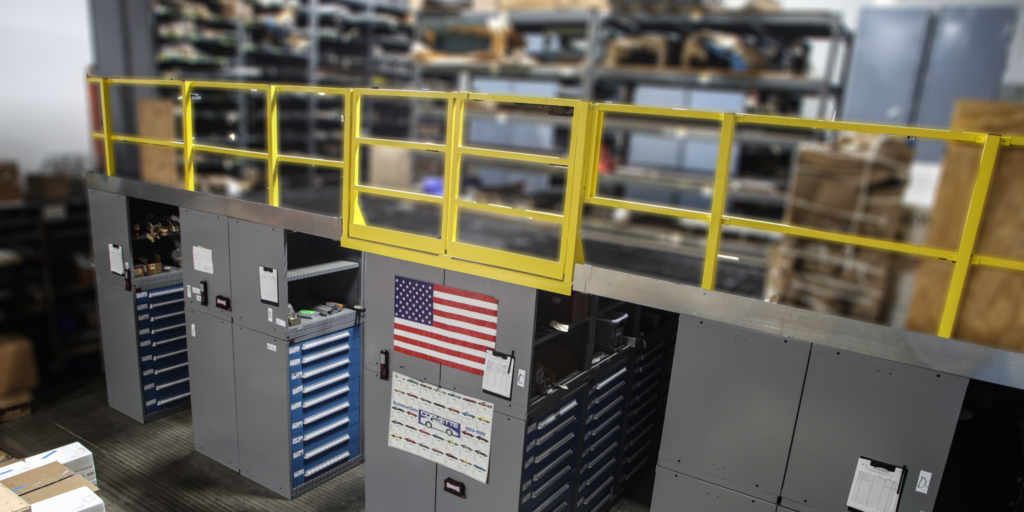
What Can You Really Do with Mezzanine Space?
Most commonly, our customers are looking to do one of four things with their work platform or mezzanine space:
Increase storage space
Add offices or personnel rooms
Safely secure equipment
Create an optimized SKU storage & pick area
Using your existing vertical space is much more cost-effective than renting or buying additional space, splitting your workforce, and adding travel expenses and time. Your new mezzanine with help reduce clutter, improve flow, optimize processing.
Private & Public Personnel Space
Inplant modular offices are the fast, economical solution for building offices, work areas, break rooms, clean rooms, etc., and the mezzanine is a perfect spot to house your new facilities. All our modular building designs are customizable and completely equipped to service the needs of your team.
Safe Equipment Storage
Equipment rooms can be designed as part of your mezzanine space, freeing up valuable floor space for storage and operations of fast-moving inventory and equipment. Equipment rooms are customizable, private, and secure.
Optimized Order Picking - Pick Modules
Floor-level with storage above or complex multi-level pick modules — whatever your needs, the Apex team will scale your design to maximize space and efficiency while keeping your workers safe.
Safety, Compliance & Load Capacity
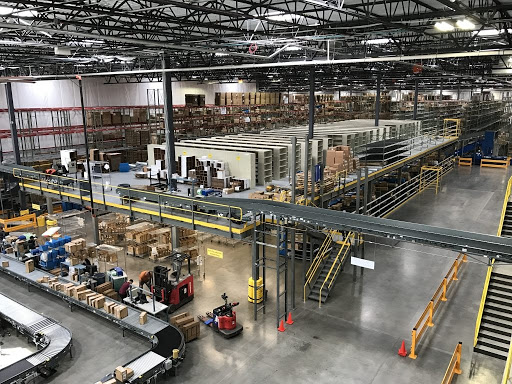
Safety is a primary concern for any elevated structure in a working warehouse. A properly designed mezzanine meets OSHA and ANSI standards from the start, with safety features engineered into the structure rather than added as afterthoughts.
Standard safety components include guardrails (typically 42 inches with mid-rails), kick plates to prevent items from sliding off edges, and self-closing gate systems at stair and loading access points. These features are required by the Occupational Safety and Health Administration for elevated work platforms and are included in every Apex mezzanine design.
Load Capacity Engineering
Mezzanine load capacity is determined by two primary calculations: uniformly distributed load (UDL) and point load. UDL measures total weight spread evenly across the platform surface, while point loads account for concentrated weight from items like rack uprights, heavy machinery, or pallet stacks. Apex engineers both calculations into every design, ensuring the structure handles your actual storage and operational loads.
Decking Options
Decking selection affects load distribution, fire compliance, and surface durability. Common decking options include:
Bar grating: Allows light, air, and sprinkler water to pass through
Plywood: Cost-effective for lighter applications
Steel plate: Heavy-duty for equipment platforms
Resin deck: Smooth surface for carts and foot traffic
Your choice depends on what happens on and below the mezzanine level.
Apex designs every structure to code. Permitting, fire suppression compliance, and occupational safety requirements are handled as part of the project, not left for you to figure out on your own.
Have questions about load requirements or safety compliance?
Mezzanine Installation: What to Expect
One of the biggest concerns buyers have about warehouse mezzanines is disruption. How long will it take? Will you need to shut down operations? Mezzanine installation through Apex is designed to minimize impact on your daily workflow.
The Process
Every project starts with a site assessment and design consultation. Apex engineers evaluate your existing facility, including ceiling height, column placement, floor slab condition, sprinkler systems, and electrical infrastructure. This assessment determines what type of mezzanine structure fits your space and what materials are required.
From there, professional crews handle permitting, fabrication, and installation. Steel structures are fabricated to spec (including custom paint matching when needed) and assembled on-site by experienced installation teams. Most mezzanine installations are completed significantly faster than traditional construction projects, with minimal disruption to surrounding operations.
What Apex Handles
-
Site assessment and 3D AutoCAD design
-
Permitting and code compliance
-
Steel fabrication and custom finishing
-
Professional installation by trained crews
-
Post-installation inspection and signoff
You don’t need to coordinate separate contractors for engineering, fabrication, and installation. Apex manages the entire project from initial concept through final walkthrough. That’s the advantage of a single-source provider with expertise across design, steel structures, and mezzanine installation.
Frequently Asked Questions
How do I know if my warehouse has enough ceiling height for a mezzanine?
As a general rule, you need enough clear height to accommodate the mezzanine platform depth, usable headroom on both the ground floor and the mezzanine level, and clearance for sprinklers and lighting. Minimum requirements vary based on the type of mezzanine, what you’re storing or doing on each level, and local building codes. The best starting point is a site assessment where an engineer measures your actual ceiling height, identifies obstructions, and determines what’s feasible for your existing facility.
What is the difference between a rack-supported mezzanine and a freestanding work platform?
A rack-supported mezzanine is built within your pallet racking structure, using the rack as its foundation. It’s typically less expensive and works well for adding pick levels or light storage above existing aisles. A freestanding work platform (industrial work platform) stands on its own structural columns, independent of any racking. It handles heavier loads, accommodates more layout changes over time, and is easier to expand. The right choice depends on your load requirements, how much flexibility you need, and whether you already have racking in place.
Do warehouse mezzanines require building permits?
In most jurisdictions, yes. Mezzanines are classified as building structures and typically require permits that address structural integrity, fire code compliance, egress, and load capacity. Permit requirements vary by municipality. Apex handles the permitting process as part of every mezzanine project, so compliance is built into the timeline from the start.
How much weight can a warehouse mezzanine support?
Load capacity depends entirely on the design. Mezzanines are engineered for specific uniformly distributed loads (total weight spread across the surface) and point loads (concentrated weight in specific areas). Capacity can range from light-duty applications to heavy industrial loads supporting dense storage or equipment. Your Apex engineer calculates both load types based on what you plan to store and how the space will be used.
Can a mezzanine be relocated or expanded after installation?
Freestanding mezzanines are generally easier to expand and can sometimes be relocated, depending on the structure’s design and the new facility’s layout. Rack-supported mezzanines are tied to the racking configuration, so relocation is more complex. If future expansion is a priority, discuss this during the design phase. Apex can engineer the initial structure with future growth in mind, including pre-planned connection points and modular sections.
Is a mezzanine more cost-effective than leasing additional warehouse space?
In most cases, yes. A mezzanine adds usable square footage inside your existing facility without the recurring costs of a new lease, additional utilities, insurance on a second building, or transportation between locations. The upfront investment is typically recovered faster than the cumulative cost of extra space. The math varies by market and facility, so a cost-effective solution for one operation may not apply universally. Talk to a storage expert to compare options based on your specific situation.
What fire code and sprinkler requirements apply to mezzanine installations?
Fire code requirements depend on your local jurisdiction, the size of the mezzanine, and what’s stored above and below the platform. Most installations require sprinkler coverage both above and below the mezzanine level. Decking material matters too: bar grating allows water to pass through from overhead sprinklers, while solid decking may require separate suppression systems underneath. Apex designs mezzanine systems with fire suppression compliance factored in, including coordination with your existing sprinkler infrastructure.
Put Your Vertical Space to Work
Every warehouse has unused space above the floor. Warehouse mezzanines turn that space into storage, work areas, offices, and pick zones that directly benefit your operation. Apex brings 20+ years of expertise in the material handling industry, from initial design through professional installation.
Whether you need a simple storage platform or a complex multi-level pick module, the process starts with a conversation about your space, your challenges, and your goals.
The Solutions You Need to boost warehouse productivity
automation solutions
The right tech applied for optimal efficiency
Warehouse Storage Equipment
Extensive variety – system design & install

Rack Audit & Repair
Quick Ship Inventory

industrial fans
Warehouse Airflow Solutions
Contact Us To Get Started
Fill out the form below to speak with one of our experts.
