

Two Pallet Positions, One Simple Solution - Go with Double-Deep Pallet Racking
When SKU volume dictates that you need more pallet positions than your standard selective pallet rack can yield, consider deep-reach (or double-deep pallet racking). Deep-reach is a 2-pallet deep rack design that is often configured back-to-back with another 2-deep row. This configuration provides twice the pallet storage with only two aisles vs. four.
Advantages | Considerations
- Fewer aisles - free up floor space
- Double pallet positions
- Low maintenance
- Easy to use
- Requires deep-reach forklift
- Reduced utilization percentage
Call the Apex pallet racking and warehouse design team for expert guidance. We offer full-service support from design through project implementation and installation. Our team is cross-trained to ensure a seamless experience that saves you time, money, and aggravation dealing with multiple sources and vendors. We’re ready to help you meet your operational goals.
Deep-Reach Trucks and Deep-Reach Rack, Let’s All Be Friends
Double-Deep pallet racking may be the system for you, but it will require a deep-reach forklift to load and extract pallets. This specialty forklift accesses the pallet racking system by driving into the rack to reach the rear pallet position. At that point, the outriggers at the truck’s base enter the rack system, and as we all know, anytime a forklift gets up close and personal with a racking system, the risk level increases.
The Apex team is here to ensure that your double-deep pallet rack system and forklift maintain a friendly relationship.
Apex Deep-Reach Design Features
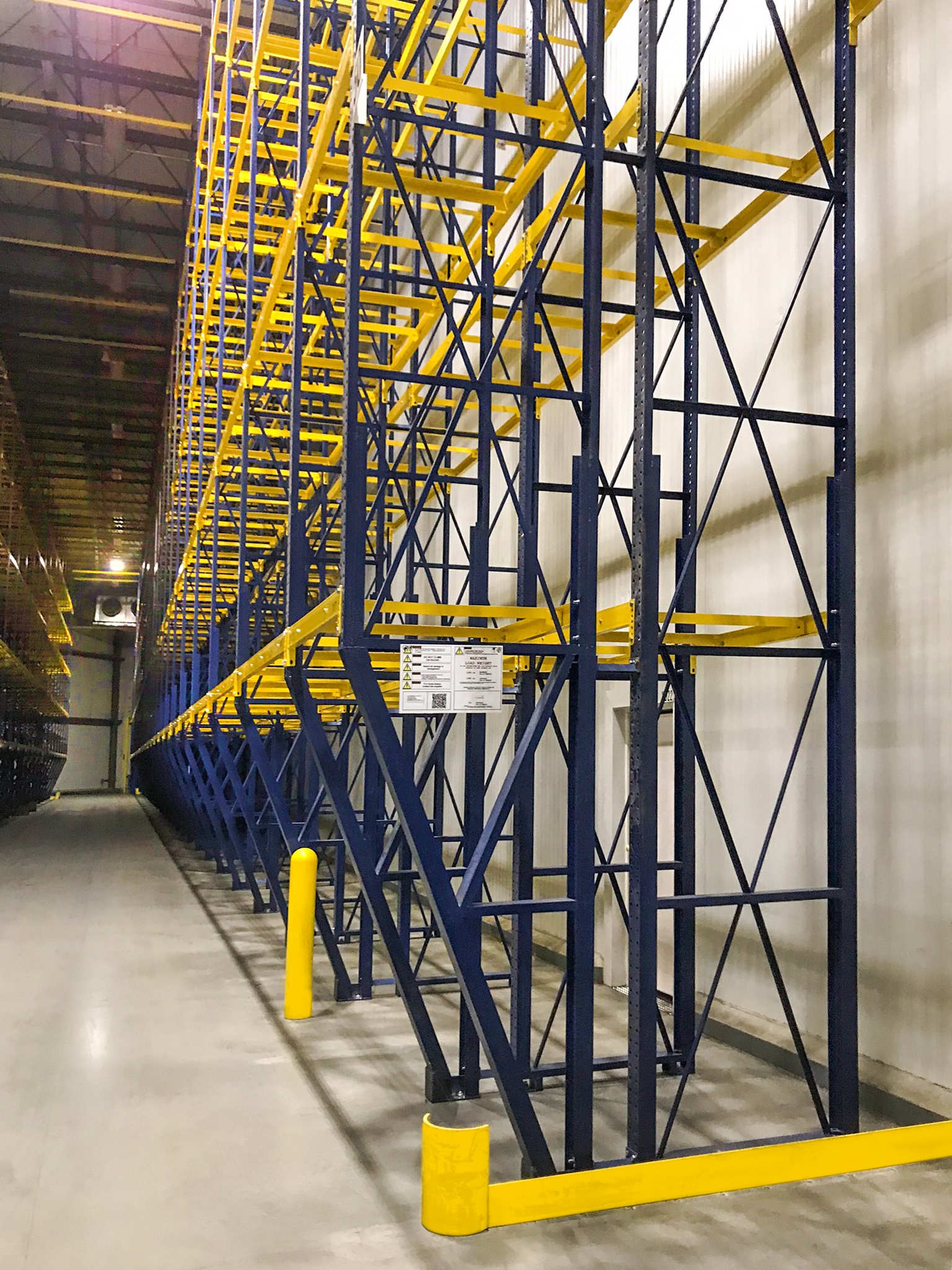
- Sloped column
- Offset leg column
- Raised I-beam
- Column guards
- End-row guards
To minimize rack damage from forklifts, Apex has design options that will protect your double-deep system. For example, sloped or raised I-beam columns are a very effective way to remove the lower column from the forklift strike zone. Also, column guards are very effective at preventing damage in more traditional column designs.
In addition to the column design, our system design experts will configure your aisles to give you as much available warehouse space as possible based upon your forklift specs. Narrow and very narrow aisle vehicles can free up a significant amount of floor space for operational use. Working with you, we will be able to assess your needs and deliver the right solution.
Call our warehouse design experts for a free consultation.
Customize Deep-Reach Pallet Racking to Your Warehouse Needs
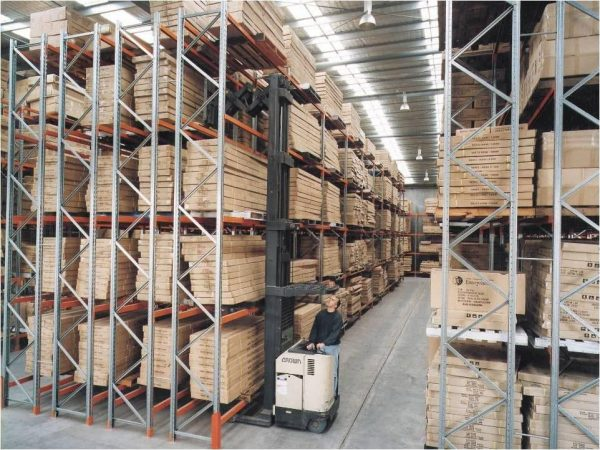
Designing a double-deep pallet racking system goes deeper than deciding on the column shape or safety features. Depending on your inventory specs and expected warehouse activity, you can choose between roll-formed or structural steel racking components. Each material has benefits and considerations that may or may not be essential to your unique warehouse operation. We will work with you to ensure you make the best, fully-informed decision and that your rack system will meet your needs.
One call does it all at Apex – full-service, seamless integration for design, project management, and installation. Call today to get started on your next project.
The Solutions You Need to boost warehouse productivity
automation solutions
The right tech applied for optimal efficiency
Warehouse Storage Equipment
Extensive variety – system design & install
Rack Audit & Repair
Quick Ship Inventory

industrial fans
Warehouse Airflow Solutions
FREQUENTLY ASKED QUESTIONS
What is double-deep pallet racking, and when is it the right storage solution?
Double-deep pallet racking is a high-density storage system that stores two pallets deep from a single aisle, increasing pallet capacity while reducing the number of aisles required. It works best for warehouses that store multiple pallets of the same SKU and want more storage within an existing footprint. Because the rear pallet is only accessible after the front pallet is removed, it is typically best suited for operations that can accommodate Last-In, First-Out (LIFO) storage within each rack position.
What type of forklift is required for double-deep pallet racking?
Double-deep pallet racking requires a deep-reach forklift to access the rear pallet position safely. Standard counterbalance forklifts cannot retrieve pallets stored behind the front load. Forklift specifications, aisle width, lift height, and pallet dimensions should all be considered during system design because equipment capabilities directly affect storage capacity, operator efficiency, and rack protection.
How does double-deep pallet racking compare to selective pallet racking?
Double-deep pallet racking provides greater storage density than selective pallet racking by storing two pallets deep instead of one, reducing aisle requirements and increasing pallet positions within the same floor space. The tradeoff is reduced pallet selectivity because the front pallet must be removed before accessing the rear pallet. Facilities with high SKU variety or frequent single-pallet retrieval often benefit more from selective pallet racking, while operations with multiple pallets per SKU may gain more value from double-deep storage.
Is double-deep pallet racking suitable for high-SKU warehouses?
Double-deep pallet racking is generally best for warehouses with moderate SKU counts and multiple pallets of each SKU rather than facilities requiring immediate access to every pallet. Operations with a large number of low-volume SKUs may experience more pallet moves because rear loads require front pallets to be removed first. Inventory profile, replenishment frequency, and picking requirements should all be evaluated before selecting this storage configuration.
How much additional storage capacity can double-deep pallet racking provide?
Double-deep pallet racking can increase storage capacity by approximately 15% to 30% compared to single-deep selective racking by reducing aisle space. The actual increase depends on your building layout, aisle configuration, and lift truck requirements. The best design balances storage density with accessibility and operational efficiency.
What should be considered when designing a double-deep pallet racking system?
A successful double-deep pallet racking design considers pallet dimensions, load weight, forklift reach, aisle widths, ceiling height, rack protection, and inventory flow. The system should be engineered around both the storage equipment and the lift trucks that will operate within it. Features such as column guards, raised beams, or sloped columns may also help reduce rack damage in facilities with frequent forklift traffic.
Can existing selective pallet racking be converted into double-deep pallet racking?
Possibly. Some selective pallet racking systems can be reconfigured for double-deep storage, but feasibility depends on the existing rack system, available floor space, structural capacity, and lift truck requirements. Converting to double-deep storage typically requires changes to the rack layout and aisle configuration, along with verification of load capacities and system compatibility. A professional rack assessment can determine whether modification or replacement is the safest and most practical approach.
Does double-deep pallet racking support FIFO inventory rotation?
Double-deep pallet racking does not typically provide strict First-In, First-Out (FIFO) inventory rotation because the front pallet must be removed before accessing the rear position. It generally functions as a Last-In, First-Out (LIFO) storage method within each bay. Operations with expiration dates, lot control, or strict inventory rotation requirements often benefit more from pallet flow racking or other FIFO storage systems.
Is double-deep pallet racking a good alternative to drive-in racking?
Double-deep pallet racking offers a balance between storage density and pallet accessibility, while drive-in racking prioritizes maximum density for large quantities of the same SKU. Double-deep systems provide better selectivity because forklifts remain in the aisle, whereas drive-in forklifts enter the rack structure during loading and unloading. The better choice depends on SKU volume, throughput requirements, available equipment, and inventory rotation needs.
Contact Us To Get Started
Fill out the form below to speak with one of our experts.
