
High-Density, Condensed Pallet Storage Racking
Drive-In Pallet Racking

Drive-In Pallet Racking - Cost-Effective Deep Lane Storage
Drive-in pallet racking is the go-to solution for warehouses handling large volumes of the same or limited SKUs. Designed for Last-In/First-Out (LIFO) stock rotation — or First-In/First-Out (FIFO) with a Drive-Thru layout — this system maximizes pallet positions while minimizing aisle space. Store up to 10+ pallets deep per lane with durable, forklift-accessible racking engineered for lasting performance.
Apex customizes each design to your inventory flow and safety needs, helping you optimize space and improve operational efficiency.
Advantages | Considerations:
- High-density pallet racking
- Ideal for high-volume, low-SKU applications
- Lane depth 10+ pallets deep
- LIFO stock rotation – drive-in
- FIFO stock rotation – drive-thru
- Vulnerable to honeycombing – empty pallet positions due to SKU increase
Apex engineering and design experts will help you choose the drive-in or drive-thru pallet racking design that will work best for your facility. Call us for a free consultation.
How a Drive-In Racking System Functions
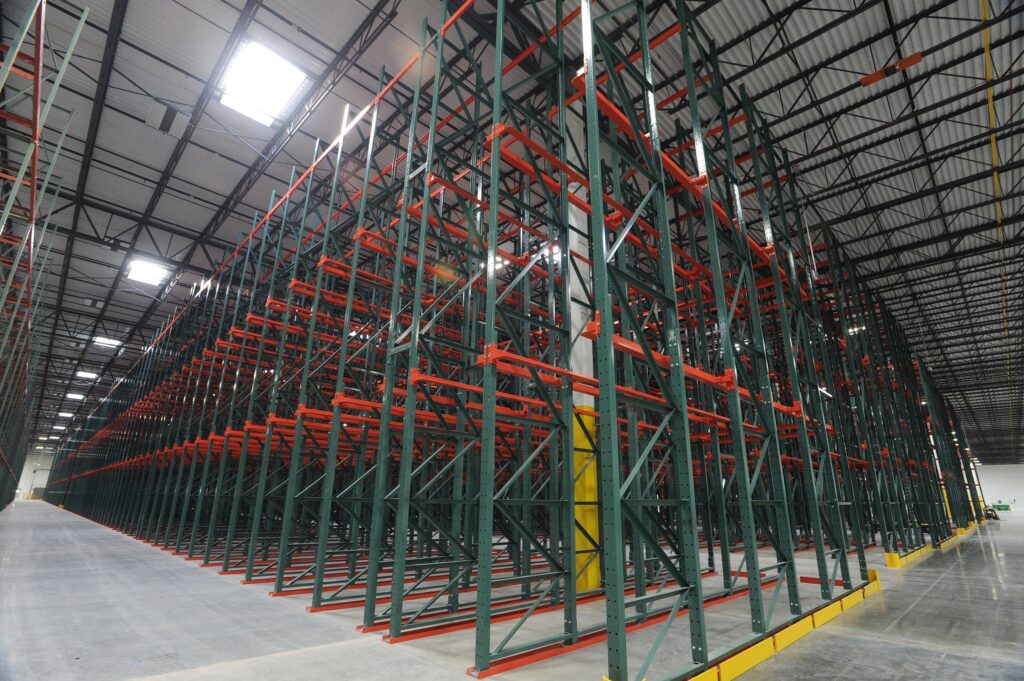
The drive-in racking system construction begins with upright frames that form internal lanes, eliminating the conventional aisles found in selective rack. This compact structure creates a dense, continuous storage block that maximizes vertical space and floor space simultaneously.
Each bay is open from floor to ceiling. Heavy-duty load rails run the full depth of the bay, mounted on the left and right sides of each rack storage lane. Pallets are suspended along side rails with no bottom support beneath the load, which makes pallet integrity critical. Rail stops attached at the lane ends secure inventory and prevent pallets from traveling past the storage depth.
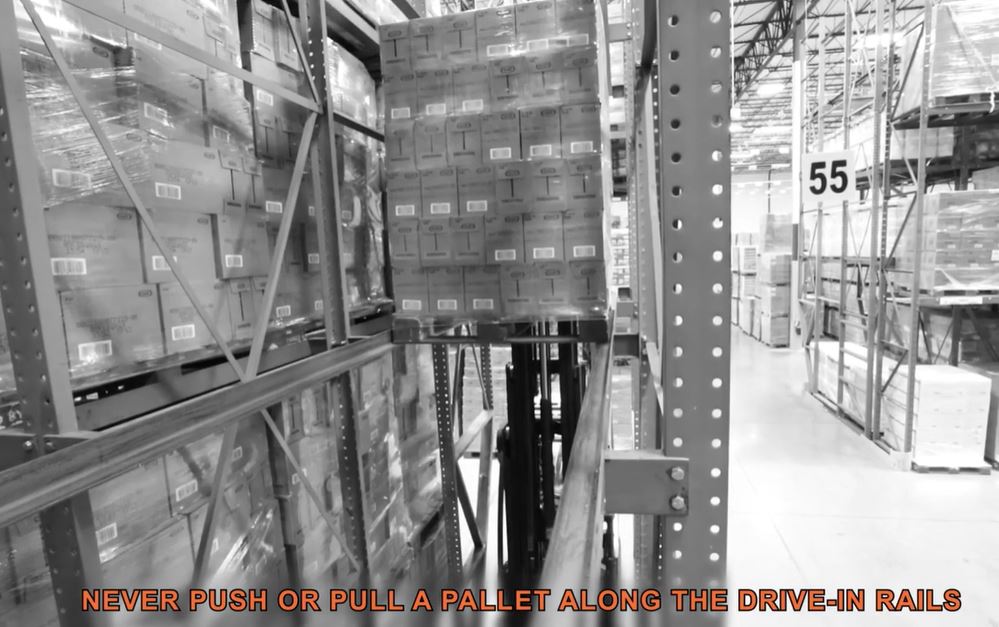
Forklifts enter the drive-in unit from the front aisle, lifting each unit load above the support rails and placing it at the deepest free location. Loading proceeds from the back of the lane toward the front. Unloading reverses that sequence: the operator retrieves the front pallet first, working back through the lane as storage and removal operations continue.
The system’s vertical support relies on roll-formed or structural steel upright frames connected by horizontal bracing. Pallet beam rail systems run the depth of each lane. This construction system is engineered for the weight and impact demands of repeated forklift entry.
Where Drive-In Racking Fits Best (and Where It Doesn't)
Ideal Applications
Drive-in racking performs best in high-volume, low-SKU environments where each lane stores a single product type. Typical applications include:
Cold storage and controlled temperature storage facilities, where minimizing compact racking aisles reduces refrigerated air volume and energy costs
Seasonal inventory staging and buffer storage between different manufacturing stages
Operations with a clear load management strategy where LIFO rotation is acceptable
Facilities focused on increasing storage capacity compared to conventional pallet racking without adding square footage
When Drive-In May Not Be the Right Fit
High-SKU operations that require frequent access to multiple product types will quickly run into honeycombing issues. When all the pallets in a lane store only one SKU, partially depleted lanes lock out access to remaining positions. Other storage systems may serve these operations better.
Consider alternatives when FIFO rotation is mandatory and floor space won’t accommodate a drive-through layout, when pick speed and selectivity outweigh storage density priorities, or when pallet sizes vary enough to prevent consistent lane dimensions. A pallet shuttle system or push-back racking is the most common alternative when selectivity or throughput becomes the priority.
Drive-In vs. Drive-Through: Choosing the Right Configuration
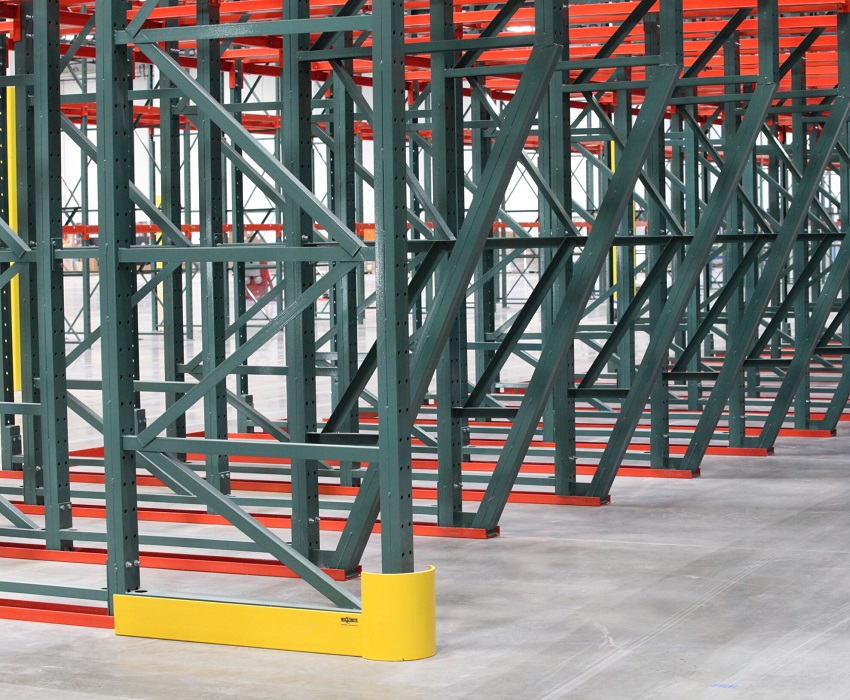
Drive-in and drive-through pallet racking use the same structural approach but differ in entry points and rotation logic.
Drive-in (LIFO): Single entry point on one end of the lane. Forklifts load and retrieve from the same storage lane. Best when product rotation is flexible and maximizing depth is the priority.
Drive-thru rack (FIFO): Open at both ends, loading from one side and retrieving from the other. The drive-through configuration works for operations that need to effectively regulate flows and maintain strict product rotation, such as food and beverage, pharmaceutical, or date-sensitive inventory.
Drive-through racking requires two working aisles, one at each end of the lane. That reduces some space savings compared to drive-in but provides the rotation compliance some operations require.
Drive-In Racking vs. Other High-Density Storage Systems
Drive-in is one of two high-density solutions at its cost level. Here is how it compares against the most common alternatives.
| System | Density | Selectivity | Est. Cost/Position | Best When |
|---|---|---|---|---|
| Drive-In Rack | High | Low | ~$200 | Low SKU, LIFO, cost-effective priority |
| Push-Back Rack | High | Medium | ~$275 | Dynamic LIFO with better access |
| Pallet Flow Rack | High | Medium | ~$375 | FIFO required, gravity flow |
| PEAK Pallet Shuttle | Very High | Medium | ~$350 | Higher throughput, semi-automated |
| Selective Rack | Low | Full | ~$150 | Full selectivity, any SKU mix |
Drive-in is among the most affordable systems compared to other compact solutions. It delivers strong space savings and high storage density at a lower cost per position than dynamic alternatives. If your operation can work within LIFO rotation and low SKU counts, drive-in is a cost-effective starting point. As throughput demands or SKU counts grow, other storage systems with moderate cost increases can address those gaps. Apex can walk you through a side-by-side comparison once your inventory data is on the table.
Special Rack Safety Considerations for Drive-In Pallet Racking
Due to the excessive forklift access to the drive-in pallet system, it is wise to consider rack safety features to protect your team, racking, equipment, and inventory.
Drive-In System Safety Features
-
Column protectors
-
End-of-row guards
-
Heavy-duty horizontal struts
-
Floor channel
-
Floor angle stops
-
Heavy-duty, boxed, and recessed columns
The Apex team will help you choose the best system design and rack guards to ensure your team can keep things safely and efficiently moving. We also recommend forklift operator training specific to loading and unloading the drive-in rack. See our video below for system-specific driver training videos in English and Spanish.
Safe Loading and Unloading in Drive-In Rack
Before You Load: Safety and Prep Essentials
Before beginning loading and unloading operations in a drive-in system, confirm four things:
-
Operator certification is current and specific to drive-in or narrow-aisle operation
-
Pallet quality meets system requirements: pallets drive in racking must be in good condition and consistent in size
-
All pallets in the same storage lane are uniform in dimension
-
Load weight has been verified against the load capacity rating and maximum lifting capacity for that lane
Step-by-Step: Safe Loading and Unloading Operations
-
Square the forklift to the lane opening before entering
-
Raise the unit load to clear the front support rails
-
Drive slowly into the lane, aligning forks with the rails on both sides
-
Place the load at the deepest free location, lowering onto the support rails cleanly
-
Tilt to release the load and back out slowly with forks level
-
Confirm the pallet is seated on both rails before exiting
For unloading: reverse the sequence, retrieving the front pallet first. If a pallet is misaligned or won’t release cleanly, stop and resolve the issue before continuing drive-in storage system operations. Never force a misaligned load deeper into the lane.
What to Consider Before Choosing Drive-In Racking
Facility requirements
Ceiling height determines how much vertical space the system can use. Slab condition and thickness affect anchor options and load ratings. Confirm floor specs with your Apex engineer before finalizing the design.
Inventory analysis
Drive-in is most effective when SKU counts are low, and pallets stored within each lane are consistent in weight and dimension. Confirm your load management strategy: LIFO rotation must be operationally acceptable for your inventory.
Equipment considerations
Drive-in systems require a counterbalance forklift. Confirm lift truck dimensions against lane width before specifying handling equipment. Operator training investment should be factored into total project cost.
Budget context
Drive-in is among the most cost effective high density storage solutions at approximately $200 per position. Factor in forklift requirements, operator training, and safety accessories to get a complete picture of the investment.
Honeycombing
If SKU counts are likely to grow over time, the honeycombing risk grows with them. Plan your load management strategy around the inventory profile you expect in two to three years.
When to consider automation
If throughput demands are growing and manual drive-in can’t achieve maximum efficiency, the PEAK Pallet Shuttle offers a semi-automated alternative that delivers higher performance from the same high density storage concept. Discuss your warehouse space and throughput goals with an Apex engineer to confirm fit.
Frequently Asked Questions About Drive-In Pallet Racking
How many pallets deep can a drive-in rack system store?
Lane depth depends on SKU volume, pallet dimensions, and forklift reach capability. Systems commonly range from five to 10+ pallets deep per lane. Deeper lanes increase storage density but require careful load management planning.
What is the difference between drive-in and drive-through pallet racking?
Drive-in uses a single entry point for LIFO rotation. Drive-through pallet racking is open at both ends, allowing FIFO rotation. Choice depends on whether your operation requires strict product rotation or prioritizes maximum storage density.
Is drive-in racking a good fit for cold storage and freezer facilities?
Drive-in racking is widely used in cold storage and controlled temperature storage because minimizing aisle space directly reduces refrigerated air volume and energy costs.
What type of forklift is needed for drive-in pallet racking?
Drive-in systems require a counterbalance forklift. The specific model depends on lane depth, lift height, and load weight. Confirm lift truck dimensions against lane width before specifying handling equipment employed.
How does honeycombing affect drive-in rack efficiency?
Honeycombing occurs when empty positions develop within a lane because only the front pallet can be accessed. Keeping SKU counts low per lane and using a clear load management strategy minimizes this issue.
When should I consider a pallet shuttle system instead of drive-in racking?
If your operation needs higher throughput, more frequent access, or has concerns about forklift contact inside the racking structure, a semi-automated pallet shuttle system may be a better fit.
What maintenance does a drive-in rack system require?
Regular inspection is critical given the frequency of forklift contact. Check upright frames, support rails, and beam connectors for damage routinely. Apex’s free Rack Repair App guides self-inspections step by step, or schedule a certified Apex PROs inspection for a comprehensive assessment.
Contact Us To Get Started
Fill out the form below to speak with one of our experts.
Contact Form
Explore More Warehouse Storage Solutions
Get Started on Your Drive-In Rack Project
Whether you’re evaluating drive-in pallet racking for a new facility or looking to increase storage capacity in your current warehouse, Apex engineers are ready to help you plan the right system. We’ll review your inventory data, facility specs, and operational requirements, then recommend a design that fits your space and your budget.
DISCOVER MORE SOLUTIONS FOR YOUR BUSINESS

Automation Solutions
The right tech applied for optimal efficiency
Warehouse Storage Equipment
Extensive variety - system design & install

Rack Audit & Repair
Free self-guided App or hand it off to the Pros

Quick Ship Inventory
Pallet rack & components
Contact Us To Get Started
Fill out the form below to speak with one of our experts.
